
Raw honey is honey that goes straight from the hive into the jar… no heating, no heavy filtering.
Beekeepers pull out the bits of beeswax, which leaves the pollen and natural enzymes intact. That’s why it usually looks cloudy and tends to turn grainy over time.
Most honey on store shelves is heated and filtered instead, so it stays clear and pourable. Up next, you’ll learn what “raw” actually means, how it differs from processed honey, what it’s good for, and how to tell the real thing apart.
Raw Honey Meaning: What Makes Honey “Raw”?
So what does raw honey mean, in plain terms? It means the honey was handled as little as possible between the hive and your spoon. The National Honey Board, which works under the USDA, defines it as honey taken from the comb by spinning, settling, or straining… with no heat added.
In practice, that boils down to three simple rules.
1. No high heat
Big producers often pasteurize honey to kill wild yeast and keep it pourable. In lab tests, heating honey to 172°F (78°C) for six minutes wiped out microbes… but it also lowered the honey’s quality and its antioxidant levels.
This honey skips that step entirely. Careful beekeepers never warm it past the temperature inside the hive itself.
2. Strained, not finely filtered
It gets poured through a mesh screen or cloth. That catches beeswax flakes, bee parts, and other debris. Tiny particles like bee pollen and propolis (the sticky resin bees use to seal their hive) pass through and stay in the jar.
Filtered honey is a different story. It’s pushed through very fine filters (the most extreme version is called ultrafiltration) until almost all the pollen, tiny bits, and air bubbles are gone. That’s how supermarket honey gets its glassy, see-through look.
3. Nothing added
Raw means it is 100% honey, with no corn syrup, rice syrup, or cane sugar mixed in. Under FDA labeling rules, a product that mixes honey with another sweetener can’t be sold as plain “honey.” It has to be labeled as a blend instead.
Is “raw” a legal term in the US?
No. There’s no official federal definition of raw for honey, and the Honey Board’s version carries no legal weight. So one brand’s “raw” can differ from another’s. Some warm their honey slightly for bottling, while others never heat it at all.
That makes the word on the front of the jar a starting point, not a guarantee. So let’s find out what the process usually looks like and how to check the rest further down.
Raw Honey Process
Honey starts as flower nectar. Worker bees add enzymes to it and fan out the extra water until it turns thick and sweet. Then they seal each cell with a wax cap.
When the honeycombs are full, the beekeeper pulls the frames, slices off the beeswax caps, and spins the honey out in an extractor. Up to this point, raw and regular honey follow the same path. The split comes next…
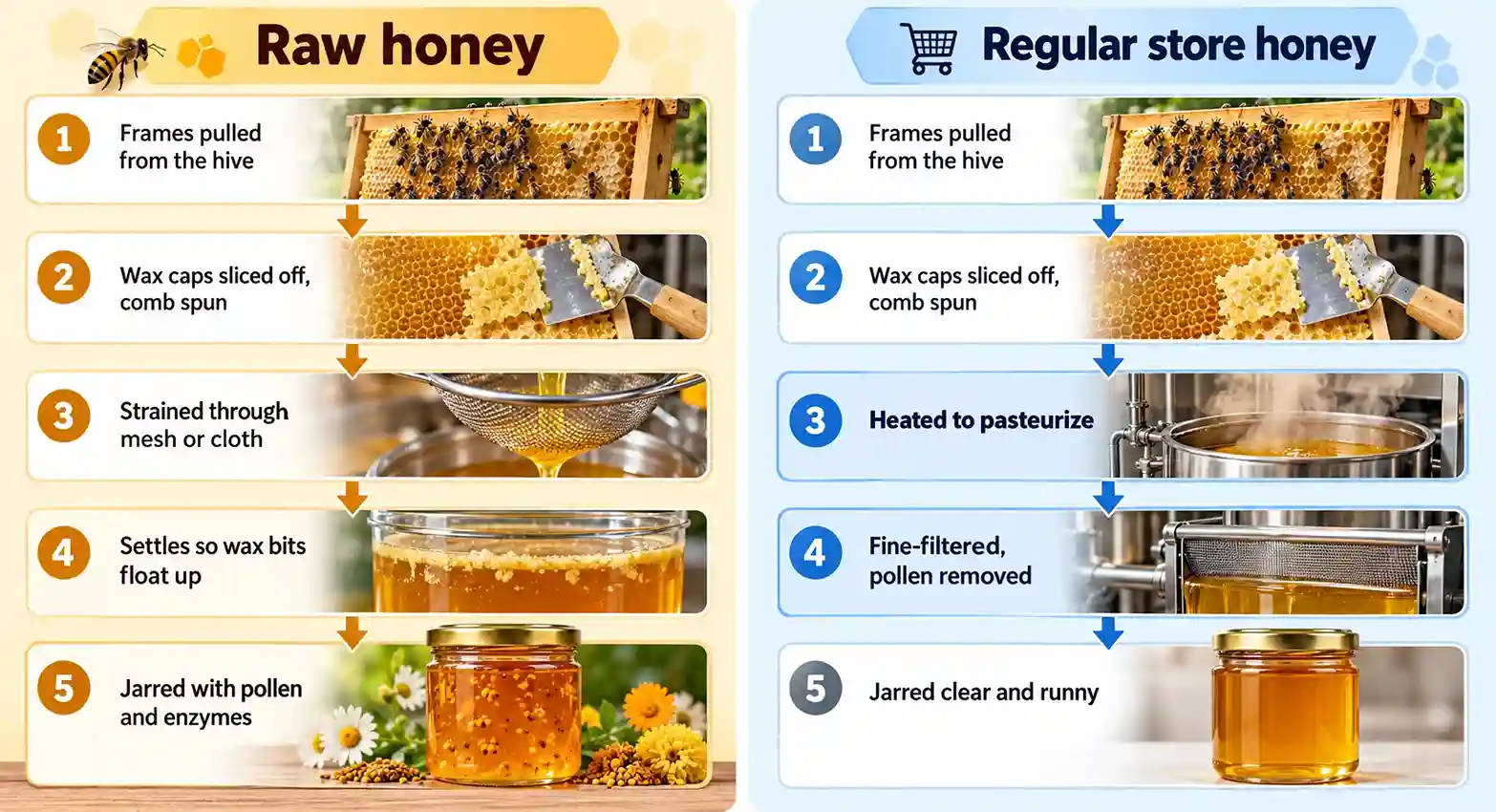
From there, raw honey passes through a strainer and goes straight into the jar. Regular honey makes two extra stops (heat and a fine filter), which help it look clear on a shelf but don’t add anything to it.
Raw Honey vs Regular Honey: What Changes After Processing
When people compare raw and regular honey, they often expect a big gap in sugar or calories. There isn’t one. The real difference is what gets removed, or changed, on the way to the shelf.
| Feature | Raw honey | Regular store honey |
| Processing | Extracted and strained | Heated and fine-filtered |
| Heat | No added heat | Pasteurized |
| Pollen and propolis | Small amounts remain | Mostly eliminated |
| Natural enzymes | Preserved | Reduced by heat |
| Look | Cloudy to opaque | Clear and glossy |
| Texture | Thick, may become creamy or grainy | Smooth and runny |
| Crystallizes | Sooner | Much later |
| Sugar and calories | Approximately the same | Approximately the same |
Raw honey vs processed honey
“Processed” is a catch-all word for honey that’s been heated, filtered, or both. Most of that processing exists to improve appearance and extend shelf life. According to the Honey Board, fine particles and air bubbles make honey crystallize faster, so packers filter them out to keep it liquid longer.
Does processing make honey less nutritious? Honestly, the research is mixed. Light processing mostly removes pollen and not much else. Strong heat is a different story… it does seem to lower antioxidants.
Raw honey vs pasteurized honey
Pasteurization kills the yeast that could make honey spoil, and it keeps honey runny for months. The downside is that heat breaks down natural enzymes that bees add to honey. Raw honey retains these enzymes, which is a key reason many individuals prefer it.
Label words, decoded
| Label word | What it signifies | Is it raw? |
| Raw | Not heated, according to the producer’s own standards | Usually, but it’s self-declared |
| Unfiltered | Only strained, so pollen stays intact | Not always; it may still be heated. |
| Pure or 100% honey | No other ingredients added to the honey | Not necessarily |
| Organic | Complies with USDA organic farming regulations | Not necessarily |
Raw Honey Benefits: What the Research Actually Supports
Most research evaluates honey in general, not specifically raw. Nevertheless, the beneficial compounds associated with well-known honey advantages are the same ones that heat and fine filtering processes can diminish. Here’s a straightforward assessment of the evidence.
Antioxidants
It contains natural plant compounds known as antioxidants (such as flavonoids and phenolic acids) that help protect cells from damage. Studies indicate its antioxidant capacity can rival that of many fruits and vegetables by weight, with darker honeys providing the highest scores. In a small study, a mixture of water and buckwheat honey even elevated blood antioxidant levels.
Natural germ-fighting power
Due to its thickness and low moisture content, honey inhibits germ growth. Research indicates that honey dressings can promote the healing of second-degree burns approximately 4 to 5 days faster than standard dressings. However, avoid using pantry honey on cuts, as it is not sterile.
Cough relief
A Cochrane review that analyzed six trials involving 899 children discovered that honey likely alleviates coughs more effectively than a placebo or no treatment at all. It is a simple and cost-effective choice, but should only be given to children aged 1 and older.
Pollen and propolis
As it is merely strained, it retains traces of bee pollen and propolis. The Honey Board points out that the amount of pollen is minimal, so consider it more of a bonus rather than a health supplement.
What about seasonal allergies?
The Honey Board says there’s no real evidence that local honey helps with allergies. Part of the reason is that most allergy-causing pollen is light, gets carried by the wind, and rarely ends up in honey.
Is Raw Honey Safe? Who Should Skip It
For most healthy adults, It’s fine. But it isn’t the right pick for everyone. Like:
- Babies under 12 months: no honey at all, raw or otherwise. The risk of infant botulism is real, and it’s not worth taking.
- People with pollen or bee allergies: it can carry pollen, so check with your doctor before trying it.
- Anyone with a weakened immune system: since it isn’t heat-treated, it can carry natural yeasts and bacteria. Ask your doctor first.
- People watching their blood sugar: honey raises blood sugar just like any other sugar. Count it as a carb.
The CDC is firm on the first point. No honey before a child’s first birthday, whether it’s raw or processed. The Clostridium botulinum spores behind infant botulism can survive in any honey.
How much raw honey per day?
A single tablespoon packs roughly 64 calories and 17 grams of sugar. The American Heart Association designates honey as an added sugar and recommends a daily limit of 25 grams for most women and 36 grams for most men. Consuming a teaspoon or two daily remains well within those recommendations.
What Raw Honey Looks, Tastes, and Feels Like
What ends up in your jar depends a lot on which flowers the bees visited. The Honey Board recognizes over 300 varieties in the US, each associated with a different flower type.
Raw honey taste
Usually tastes a bit richer than the store-bought kind. Gentler handling means more of its natural aroma sticks around. The exact flavor depends on the flowers the bees visited.
| Honey type | Typical color | Flavor |
| Clover | Water white to amber | Mild and sweet |
| Orange blossom | Light | Fresh, with a subtle citrus hint |
| Tupelo | Light golden amber | Mild and unique |
| Wildflower | Varies | Changes with local blooms |
Raw honey color & texture
Honey ranges from nearly clear to deep brown, and graders rate it on a scale from “water white” to “dark amber.” As a rule, lighter honey tastes milder and darker honey tastes stronger. It also tends to look cloudy, since tiny bits of pollen, wax, and air stay suspended in it.
When we see the texture, raw and fresh honey is thick and pours slowly. Over weeks or months, it may turn creamy, then firm and grainy. A thin white layer on top is usually just trapped air and wax rising. If the honey smells sour or fizzy, though, it may have started to ferment.
Why Raw Honey Crystallizes (and Why It’s Normal)
Crystallization happens when the glucose in honey separates and forms tiny crystals. It isn’t spoilage. The Honey Board notes that small bits of pollen, wax, and air help crystals form faster, which is why it often sets sooner than filtered honey.
The flowers matter too. Tupelo and sage honeys can stay liquid for a long time, while others turn solid within weeks.
To soften crystallized honey without cooking it:
- Loosen the lid and set the jar in a bowl of warm water, about as warm as a comfortable bath.
- Stir every few minutes until it turns smooth again.
- Skip the microwave and boiling water. High heat works faster, but it also damages the enzymes you paid for.
Store the jar sealed at room temperature. The fridge only speeds up crystallization.
How to Identify Real Raw Honey
Honey is one of the most commonly counterfeited (or “adulterated”) foods. When the European Commission examined 320 imported honey samples, 46% were suspected of containing added sugar syrups. Some fraudsters even removed pollen to conceal the honey’s origin.
Here’s how to distinguish genuine raw and filtered honey before making a purchase.
Start with the label.
| Green flag | Red flag |
| “Raw” plus “unfiltered” or “unpasteurized” | Only vague terms like “natural” or “premium” |
| Honey is the sole ingredient | “Blend,” “syrup,” or another sweetener listed |
| Floral source or region specified | No origin information provided |
Why kitchen tests don’t work
You may have encountered the water test, thumb test, or flame test on the internet. The Honey Board classifies all these as myths. Authentic honey dissolves in water, thickness varies according to the type, and whether a match ignites depends on moisture levels.
Even crystallization cannot be a definitive measure; some authentic honeys hardly crystallize at all. The only trustworthy test is one conducted in a certified laboratory, making it essential to purchase from a transparent source rather than relying on home experiments.
Ask the seller three questions.
- Do you apply heat to your honey, and if so, to what temperature?
- Do you filter it or merely strain it?
- Where are your hives located, and what do the bees forage on?
Reputable producers will readily provide clear answers. Indistinct responses should raise suspicions.
How to Enjoy Raw Honey Every Day
It is most enjoyable and retains its beneficial properties when not subjected to cooking. You can try it:
- In tea or warm milk, after allowing it to cool slightly
- Over yogurt, oatmeal, or fresh fruit
- In a simple salad dressing
- By the spoonful before engaging in exercise
Want to enhance your daily spoon?
For centuries, individuals have blended honey with herbs. Honey preserves the freshness of herbs and simplifies consumption. RENFORCER is based on that straightforward concept.
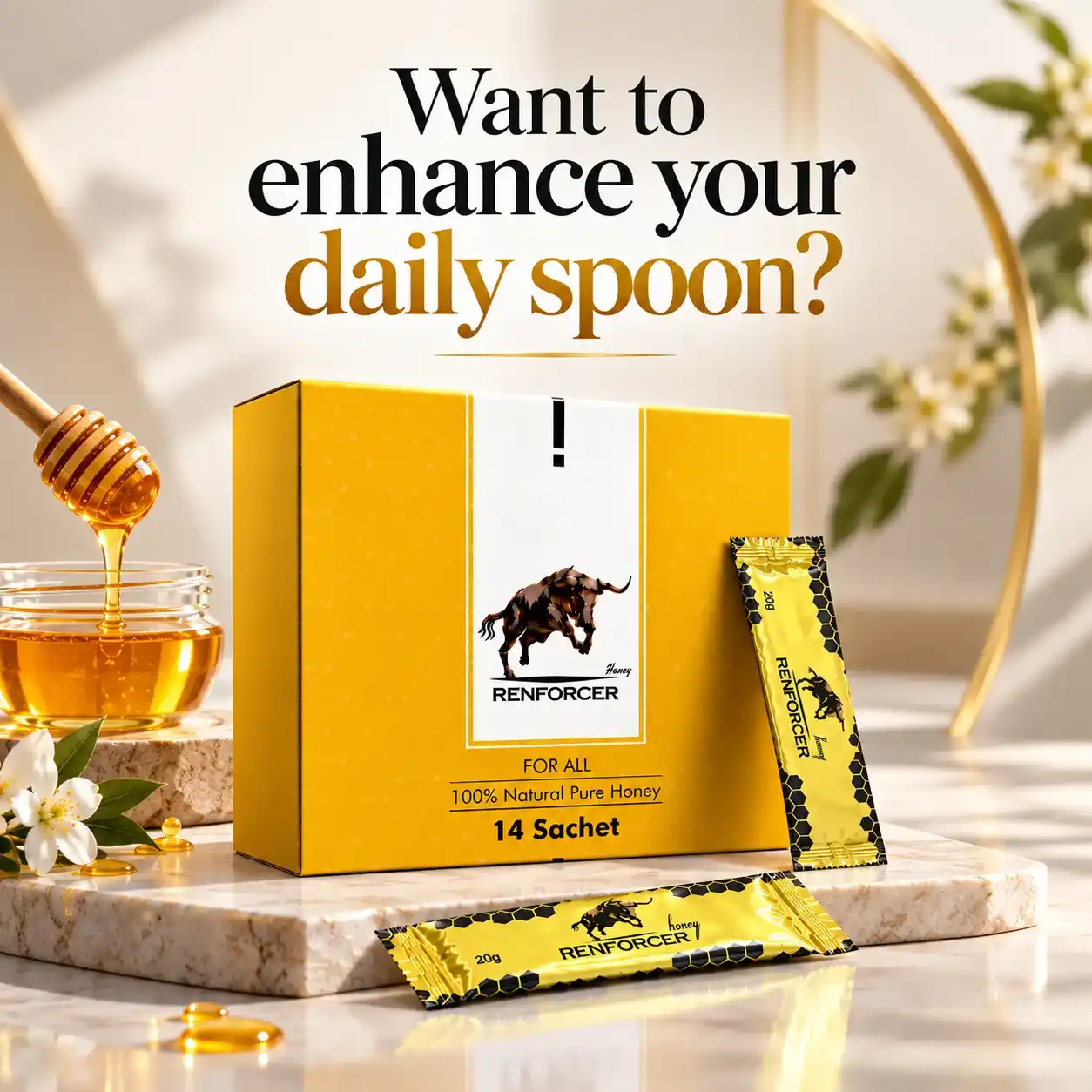
For a traditional herbal boost, consider RENFORCER Panax Ginseng Honey, which combines pure honey with Panax ginseng root, utilized in traditional Asian practices for centuries.
If you lean towards something directly from the hive, the RENFORCER Royal Jelly Honey Stamina Box merges pure honey with royal jelly, the nutrient-rich substance worker bees produce for their queen.
Both products are crafted for adults seeking an easy, enjoyable honey habit to adopt consistently.
FAQs
Is Raw Honey Really Better?
In certain respects, yes. It retains its natural enzymes, pollen, and propolis (which can be removed by heat and fine filtration). However, it contains the same sugars and calories as standard honey, so consider it a superior option rather than a health food.
What Does Raw Honey Mean?
This term refers to honey that has been simply strained after extraction from the hive, without any heating or thorough filtering. Additionally, it contains no added ingredients.
Does Raw Honey Have More Nutrients?
To a small extent. It maintains more enzymes and pollen, while excessive heat can diminish the antioxidant levels in processed honey. Nonetheless, the vitamins and minerals present in any honey are in minimal quantities.
How to Reverse Crystallization?
Place the jar (with the lid loosened) in a bowl filled with warm water, and stir periodically until it regains a smooth consistency. Avoid using a microwave, as excessive heat can harm the enzymes.
Does Raw Honey Crystallize Faster?
Typically, yes. The small particles of pollen and wax found in it provide surfaces for crystals to form around. The type of flowers also has an effect (for example, tupelo honey may remain liquid for an extended period).
Can You Put Raw Honey in Hot Tea, or Does Heat Ruin It?
You can do so… but tea that is boiling hot can decompose its natural enzymes. It’s best to let your tea cool for a few minutes until it is at a comfortable drinking temperature.
How to Store Raw Honey?
Store it in a sealed jar at room temperature and protect it from direct sunlight. Avoid refrigerating it (as this accelerates crystallization), and always use a dry spoon to prevent moisture from getting in.
Final Thoughts:
Raw honey represents the natural product made by bees: unheated, merely strained, and devoid of any additives. It retains its pollen, enzymes, and authentic characteristics, and it may crystallize over time. Pay attention to labels, forgo kitchen tests, and choose suppliers who address your inquiries. Incorporating it a spoonful at a time is one of the easiest improvements you can make to your pantry. Interested in adopting a simple daily routine? Check out the RENFORCER honey selection.