
The raw honey meaning is simple. Raw honey goes from the beehive to the jar with very little change. It skips high heat and fine filtering, so it keeps more of what the bees put in it.
Raw Honey Meaning in Plain Words
In one line, the raw honey definition is honey taken from the hive and packaged with minimal processing. It stays unpasteurized and unfiltered, or only strained through a coarse mesh.
The meaning of raw honey comes down to two main ideas:
- Made with gentle warmth. The honey stays unpasteurized, which keeps it close to unheated honey.
- Lightly strained. Only larger pieces like wax chunks get strained out. Tiny bits of pollen and propolis stay in.
In the United States, “raw” has no legal definition on a honey label. The FDA has no standard of identity for honey, so each brand sets its own unprocessed honey meaning. That is why the brand you choose matters.
Raw Honey Explained: From Flower to Jar
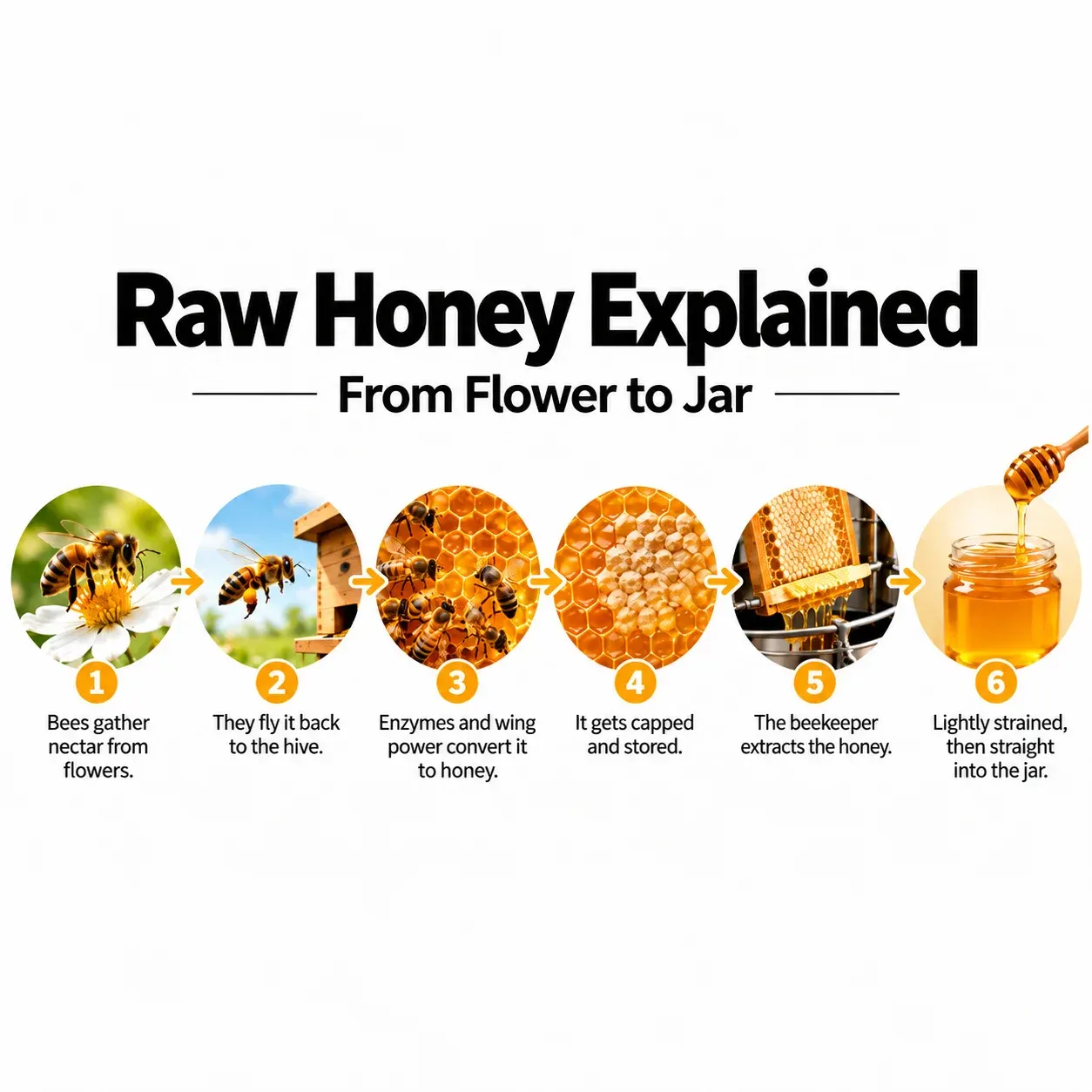
The raw honey production process starts with the bees. They handle nearly all of it themselves.
- Honeybees gather nectar. Worker bees hit up flowers and load up on nectar. Pollen tags along on their bodies.
- They fly it back to the hive. That nectar gets carried home to the beehive, where the real work begins.
- Enzymes and wing power do the rest. Inside the hive, bees mix in enzymes and fan the nectar with their wings. Water evaporates, and what’s left is honey.
- It gets capped and stored. Once it’s thick enough, they store it in the honeycomb and seal each cell with a thin wax cap.
- The beekeeper steps in. Frames come out, and honey extraction begins. Wax caps get sliced off, and the frames get spun so the honey flies out.
- A light strain, then straight into the jar. The honey passes through a coarse strainer to catch big bits of wax, then it’s ready to pack.
That’s where the raw process ends. Just gentle handling, straight into the jar. That’s what people mean by honey straight from the hive.
Regular honey, on the other hand, usually gets pasteurized. It’s heated to kill yeast and slow crystallization. Raw honey skips that entirely.
What Makes Honey Raw and Unprocessed?
Four things set raw honey apart from most bottled honey.
- It stays unpasteurized. Pasteurization uses heat to kill yeast and slow crystallization. Raw honey skips this step.
- It skips ultra-filtering. Big operations run honey through filters so fine that almost no pollen survives the trip. Raw honey keeps it.
- The jar holds just honey. No syrup, no flavors, no extra sugar.
- It is handled at low temperatures. Honey may be warmed slightly so it can flow. A lot of makers keep things gentle, warming it only to about 95°F (35°C), which is close to the temperature inside a hive.
Many people call this minimally processed honey. Some handling is normal, like straining and gentle warming. Heavy heat and fine filters are what change it.
Natural Honey Characteristics to Look For
If you’re expecting that see-through honey from the grocery aisle, raw honey will surprise you. A cloudy or creamy look is normal, and little specks of pollen, propolis, or wax often float inside.
Scoop some out and the texture tells you right away. It’s thick. And yeah, it can crystallize over time, turning grainy or even rock solid.
That’s normal. It doesn’t mean the honey is bad. The flavor is richer and more floral, and it depends on which flowers the bees visited. The shade can land anywhere between pale gold and dark amber.
What Does Raw Honey Mean Compared to Regular Honey?
Regular honey is usually pasteurized and finely filtered. That’s why it pours clear and smooth and stays runny on the shelf for ages. But all that heat and filtering can strip out some of the pollen and plant compounds.
| Feature | Raw Honey | Regular Honey |
| Heat treatment | None or very low | Pasteurized (heated) |
| Filtering | Coarse strain only | Fine or ultra-filtered |
| Pollen and propolis | Usually present | Mostly removed |
| Look | Cloudy, thick, creamy | Clear, smooth, runny |
| Crystallizing | Happens often | Happens slowly |
| Flavor | Rich, varies by flower | Mild, more uniform |
| Best for | Taste and minimal processing | A smooth, clear look |
Both are honey, and both are made mostly from natural sugars. Raw honey just stays closer to how the bees made it. Heat treatment changes the activity of the natural enzymes found in honey.
Is Raw Honey Healthier?
It may keep more of its natural compounds, but it is not a cure for anything.
Because raw honey skips heavy heat, it may keep more of these:
- Natural enzymes
- Amino acids
- Trace vitamins and minerals
- Antioxidants such as phenolic compounds
- Small amounts of pollen
Research on honey is still growing, and the amounts of these compounds are small. Processing also affects antioxidant levels differently in different honey types, so raw is not always higher. Honey is not a replacement for medical care. If you’re managing a health condition, check with your doctor before you tweak your diet. Diabetics especially should ask how honey fits their plan, since it raises blood sugar.
Who Should Not Eat Raw Honey?
Honey is one to save for after a baby’s first birthday, whether it’s raw or regular. Honey can carry naturally occurring spores of Clostridium botulinum. For older children and adults, these spores are harmless. A baby’s gut is still developing, so doctors recommend waiting until age one. Both the CDC and the American Academy of Pediatrics suggest the same.
For anyone past that age with a normal immune system, this isn’t a concern. If someone in your home has a weak immune system, ask a doctor first. Raw honey can also contain pollen, so people with pollen or bee allergies should check with a doctor before trying it.
How to Pick a Real Raw Honey
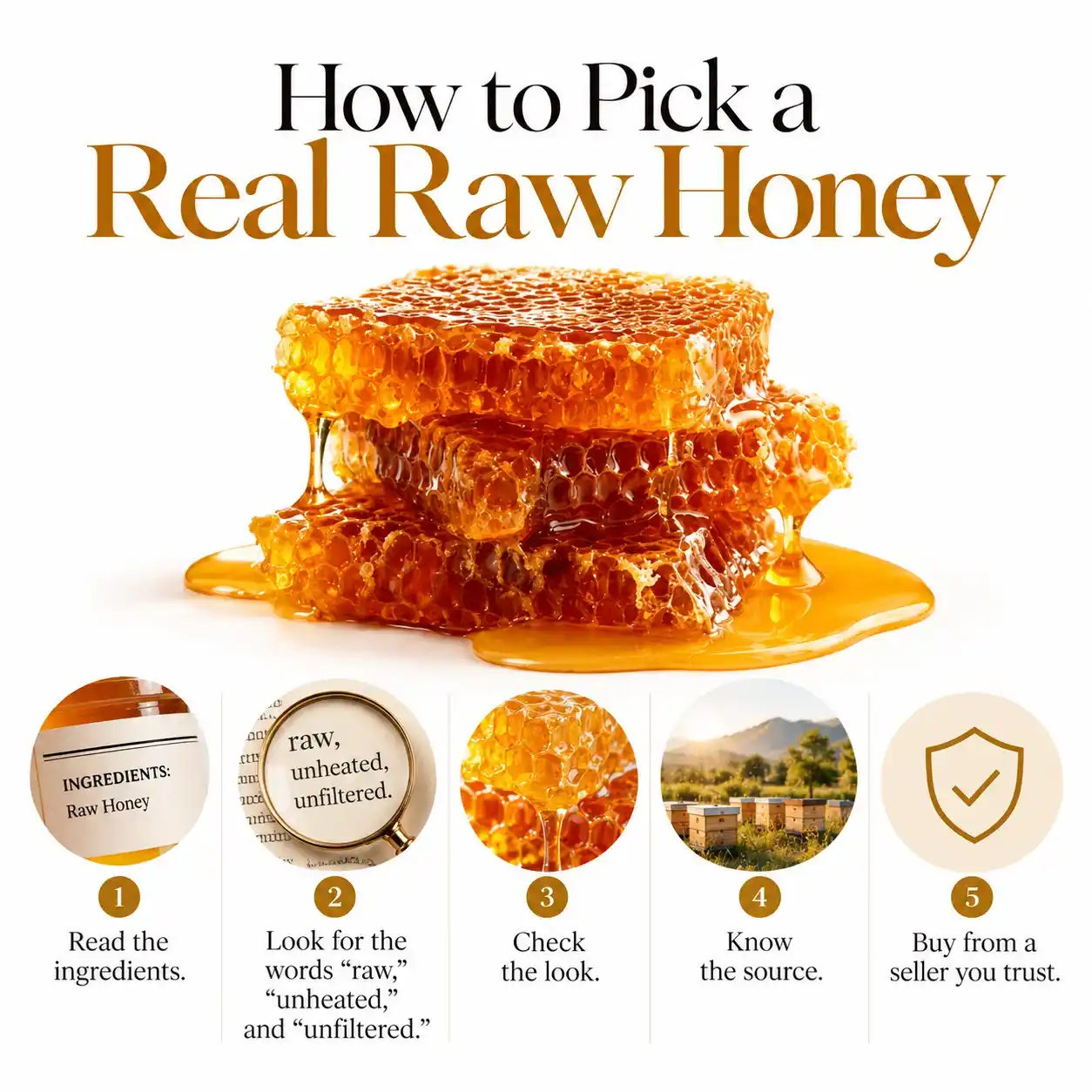
Since “raw” is loosely used, check the jar before you buy:
- Read the ingredients. The list should read just one word: honey.
- Look for the words “raw,” “unheated,” and “unfiltered.” Some brands also explain their process on the label.
- Check the look. A little cloudiness or tiny specks is a good sign.
- Know the source. Good brands tell you where the honey comes from and which flowers the bees visited.
- Buy from a seller you trust. Clear sourcing and contact details matter.
USDA grade standards are voluntary, and they list filtered and strained honey as separate styles. So words like “strained” or “unfiltered” on a label give you clearer information than the word “natural.”
Also keep in mind that “organic” and “raw” are different claims. You might find a jar that’s one, the other, both, or neither.
Renforcer Honey Blends
We also make honey blends that pair honey with traditional ingredients:
- Renforcer Panax Ginseng Honey pairs honey with Panax ginseng, a root used in traditional wellness routines for many years.
- Renforcer Royal Jelly Honey Stamina Box combines honey with royal jelly, a substance bees make to feed their queen.
Each box comes with 14 single-serve sachets, 20g each. That’s two weeks of one-a-day servings. No sticky jar, no spoon, no guessing. The ingredients stay simple too. You get real raw honey, plus either Panax ginseng root or genuine royal jelly. No synthetic fillers. Every batch is lab-tested, and the sealed sachets travel easily in a desk drawer, gym bag, or carry-on.
FAQ’s
What does raw honey mean in simple terms?
Raw honey is honey taken from the hive with little processing. It keeps its pollen and skips high heat and fine filters.
What’s the difference between raw and processed honey?
Raw honey skips high heat and fine filtering, so it keeps pollen and natural particles. Processed honey is pasteurized and finely filtered, removing most pollen.
Does Raw Honey Crystallize Faster?
Yes. Raw honey has pollen and particles that speed up crystallization. That’s normal. Warm the jar gently to make it smooth again.
Does raw honey go bad?
Honey lasts a very long time in a sealed jar at room temperature. Keep the lid tight, since moisture can make it ferment.
The Bottom Line
The raw honey meaning is easy to remember: honey that stays close to the hive. It is unheated, lightly strained, and still holds its pollen. It looks cloudier, feels thicker, and tastes richer than most store-bought honey.
Check labels, buy from honest sellers, and keep it away from babies under one year. To learn more, go back to our main guide on what raw honey is.